German cockroach containment requires an engineering-grade isolation strategy rather than broadcast surface spraying, which merely scatters breeding adults deeper into wall cavities. In high-density rental units…
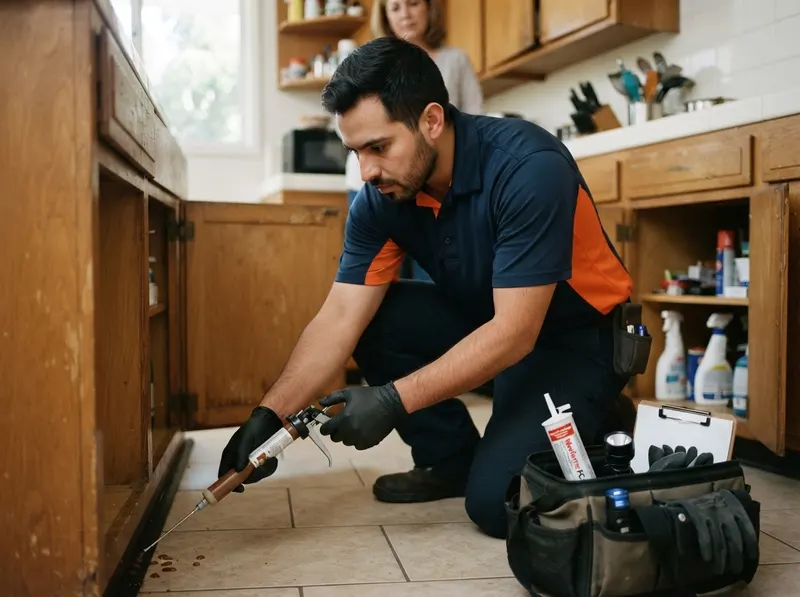
German cockroach containment requires an engineering-grade isolation strategy rather than broadcast surface spraying, which merely scatters breeding adults deeper into wall cavities. In high-density rental units throughout Koreatown and multi-story bungalows in Silver Lake, plumbing chasms behind sinks and communal utility risers serve as primary transit corridors. According to guidelines from the University of California Statewide IPM Program, the species reproduces exponentially: a single gravid female produces an ootheca holding 30 to 48 nymphs every six weeks. Containment begins by mapping aggregations around compressor motors, electrical outlet boxes, and dishwasher insulation using physical flush inspections. DiamondEdge Pest Defense isolates these micro-environments with targeted applications of non-repellent formulations and synthetic juvenile hormone mimics registered by the US Environmental Protection Agency, halting reproductive cycles without activating behavioral dispersal.
The structural reality of older Los Angeles construction dictates specialized mechanical intervention. In Echo Park craftsmen and 1920s Boyle Heights apartments, settled framing leaves gaps between drywall and subflooring where food grease and moisture pool. Unchecked infestations release airborne allergens and particulate frass that exacerbate indoor respiratory risks outlined by the American Lung Association. Rather than applying off-the-shelf pyrethroids, which induce rapid chemical resistance, technicians utilize high-potency fipronil or clothianidin baits alongside localized dusting of amorphous silica gel inside dry plumbing penetrations. The Centers for Disease Control and Prevention notes that roaches transport pathogenic organisms including Salmonella on their cuticles, making kitchen sanitation interlocked with structural containment. Gaps exceeding one-sixteenth of an inch around supply lines are closed using silicone-acrylic sealants to cut off secondary migration between adjacent units.
Decision-fit for property owners pivots between localized perimeter baiting and multi-unit cleanout measures. If an active sighting occurs in a single detached single-family home in Brentwood or Encino, an initial cleanout followed by two maintenance visits reliably suppresses the colony within 21 to 30 days. Conversely, in dense multi-family buildings along Venice canals or hillside Los Feliz complexes, containment requires coordinating adjacent wall inspections; treating one kitchen while ignoring shared pipe chases in the adjoining unit inevitably results in re-infestation. Technicians follow commercial application standards aligned with the National Pest Management Association, tracking population decline with sticky monitoring stations placed at 10-foot intervals. The physical protocol avoids synthetic residual barriers on food-prep surfaces, ensuring structural compliance under guidelines supported by the California Department of Pesticide Regulation and the sanitation frameworks overseen by the Los Angeles County Department of Public Health.
Effective maintenance relies on altering interior microclimates to starve surviving nymphs of standing moisture. Structural assessments examine sink traps, refrigerator drip pans, and dishwasher discharge hoses, referencing standards from the International Association of Plumbing and Mechanical Officials. Technicians apply HEPA-filtered vacuum extraction to instantly remove active harborages and fecal aggregation pheromones before setting precision bait matrices. Occupational handling and chemical containment strictly adhere to protocols verified by the Occupational Safety and Health Administration. Properties with heavy structural clutter or deep tenant wall penetrations in Sherman Oaks or San Pedro may require systematic de-cluttering protocols alongside mechanical barrier work, providing permanent resistance against invasive pest re-entry. Direct all inquiries and dispatch scheduling to (424) 540-2748.
Every job gets a firm, written price after a free on-site visit.
For standards, safe disposal, and service guidance on pest control services in Los Angeles, CA, useful references include U.S. EPA, ENERGY STAR, U.S. Dept. of Energy, Consumer.gov, U.S. Census Bureau, and Google Maps. General consumer and small-business resources are available from USA.gov, Better Business Bureau, FTC Consumer Advice, U.S. Small Business Administration, and Ready.gov.
Tell us about your german cockroach containment job in Los Angeles and we'll send a clear, written quote, usually the same day.
 DiamondEdge Pest Defense