Attic sanitization addresses biological hazards left behind by roof rats ( Rattus rattus ) and mice after structural entry points have been sealed. In communities like Silver Lake, Sherman Oaks, and Los Feliz, roof…
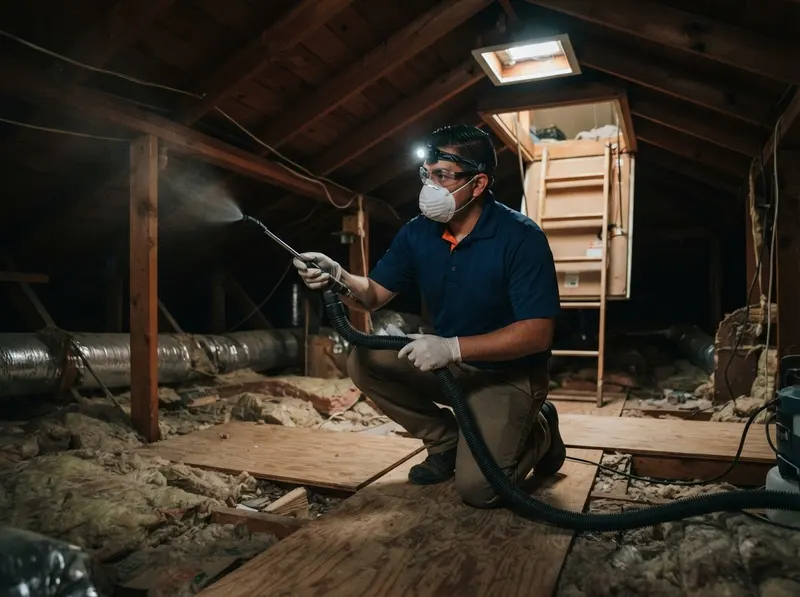
Attic sanitization addresses biological hazards left behind by roof rats (Rattus rattus) and mice after structural entry points have been sealed. In communities like Silver Lake, Sherman Oaks, and Los Feliz, roof rats exploit overhanging ficus, palm fronds, and Spanish tile roof gaps to access conditioned ceiling voids. When rodents colonize these spaces, they deposit pheromone trails, urine, and droppings that harbor airborne pathogens. According to the Centers for Disease Control and Prevention, rodent-borne contagions such as lymphocytic choriomeningitis and leptospirosis spread when disturbed dry waste particles become aerosolized. Left untreated, heating and ventilation systems pull these microscopic particulates down into occupied living areas across properties in Koreatown and Boyle Heights.
The remediation process adheres to strict containment standards established by the Institute of Inspection Cleaning and Restoration Certification. Technicians establish negative pressure enclosures using HEPA filtration units compliant with Occupational Safety and Health Administration worker-safety standards before agitating any debris. Loose droppings and urine-saturated fiberglass batts are hand-bagged in 6-mil poly containment sacks to prevent cross-contaminating interior hallways in Brentwood and Venice homes. All exposed ceiling joists, top plates, and subfloor surfaces are vacuumed using HEPA systems capable of capturing 99.97% of particulates down to 0.3 microns, in alignment with criteria set by the U.S. Environmental Protection Agency.
Following mechanical clearance, an active antimicrobial solution registered with the California Department of Pesticide Regulation is applied via ultra-low volume (ULV) cold fogging. This aerosolized mist penetrates micro-cracks around electrical chases, plumbing stacks, and framing lumber, neutralizing remaining bacteria, fungal spores, and pheromones. Homeowners weighing localized vacuuming against full insulation replacement must balance upfront cost against thermal performance and recurring pest pressure. Spot cleaning fits light, isolated incursions under 100 square feet; however, severe infestations in older Encino or San Pedro residences require total extraction of damaged material to eliminate the odor signatures that attract future exterior colonies. Replacing ruined thermal barriers also restores compliance with California Energy Commission Title 24 insulation efficiency standards. All generated biological waste is handled according to protocols outlined by the California Department of Public Health and local guidance from the Los Angeles County Department of Public Health, while vector monitoring principles from the Greater Los Angeles County Vector Control District inform long-term perimeter defense.
Every job gets a firm, written price after a free on-site visit.
For standards, safe disposal, and service guidance on pest control services in Los Angeles, CA, useful references include U.S. EPA, ENERGY STAR, U.S. Dept. of Energy, Consumer.gov, U.S. Census Bureau, and Google Maps. General consumer and small-business resources are available from USA.gov, Better Business Bureau, FTC Consumer Advice, U.S. Small Business Administration, and Ready.gov.
Tell us about your attic sanitization and decontamination job in Los Angeles and we'll send a clear, written quote, usually the same day.
 DiamondEdge Pest Defense